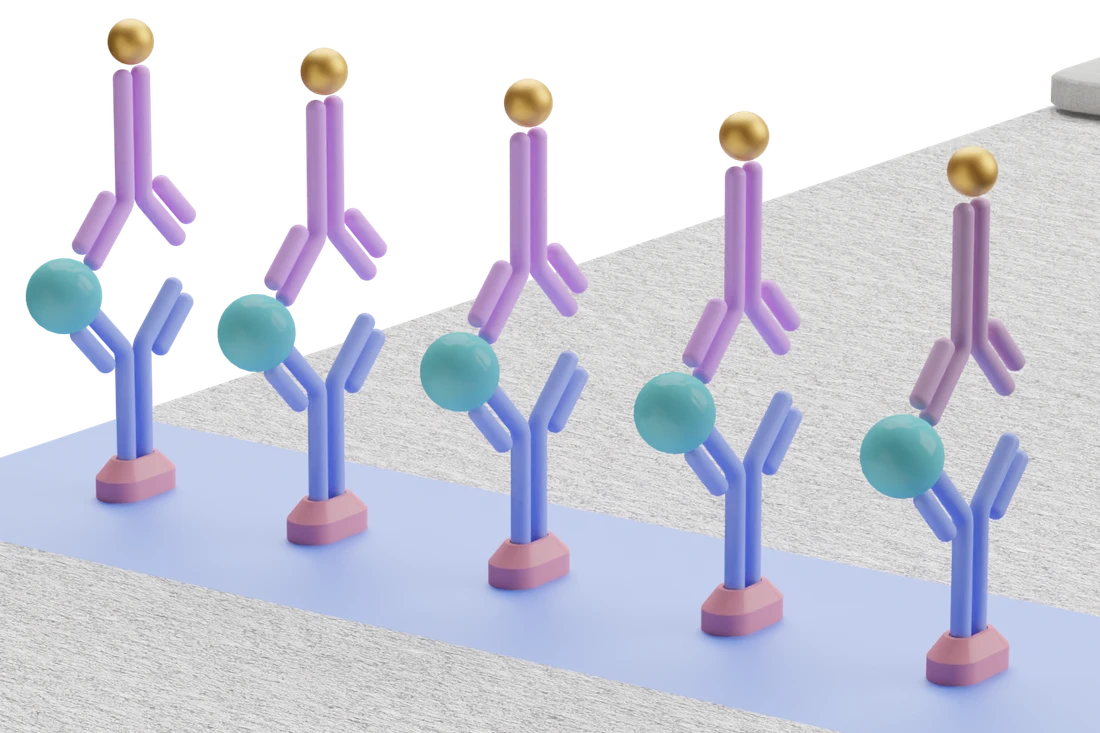
Cellulose-binding streptavidin
- Attaches to
- cellulose and nitrocellulose.
- Capture molecule
- biotinylated antibodies and other biotinylated molecules.
- Designed for
- test & control lines on nitrocellulose and cellulose supports.
- Benefits
- designed to increase test sensitivity while requiring less antibodies, and to simplify test development and manufacturing, resulting in better tests faster & cheaper.
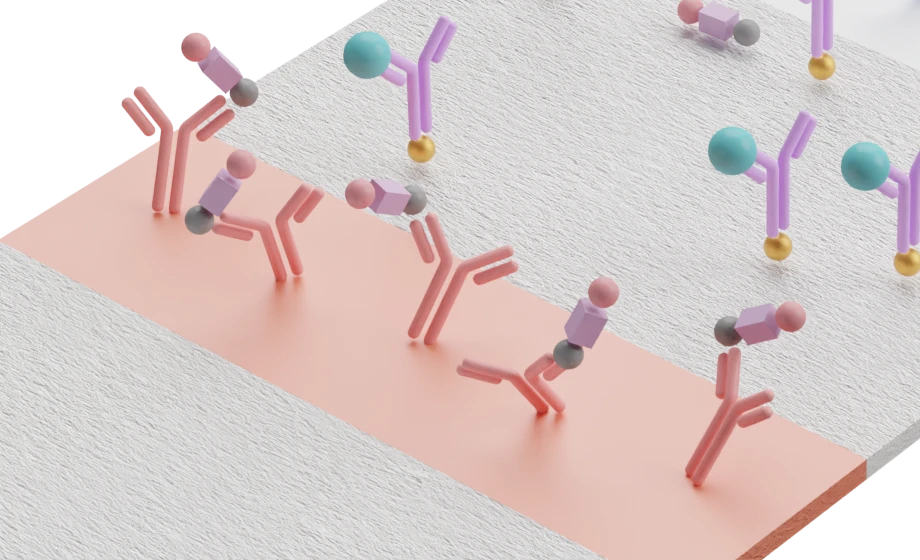
Cellulose-binding Protein G
- Attaches to
- cellulose and nitrocellulose.
- Capture molecule
- antibodies (IgG), held by their Fc region.
- Designed for
- test & control lines on nitrocellulose and cellulose supports.
- Benefits
- designed to orient unmodified antibodies on the test line without biotinylation, to increase test sensitivity while requiring less antibody.
Gold-binding streptavidin
- Attaches to
- gold surfaces and gold nanoparticles.
- Capture molecule
- biotinylated antibodies and other biotinylated molecules.
- Designed for
- gold nanoparticle conjugates and gold-coated surfaces.
- Benefits
- designed to attach streptavidin to gold in a controlled orientation without covalent conjugation, for consistent conjugates with biotinylated capture molecules.
Gold-binding Protein G
- Attaches to
- gold surfaces and gold nanoparticles.
- Capture molecule
- antibodies (IgG), held by their Fc region.
- Designed for
- gold nanoparticle conjugates and gold-coated surfaces.
- Benefits
- designed to orient unmodified antibodies on gold without biotinylation or covalent conjugation, so more of each antibody stays active.
Glass-binding streptavidin
- Attaches to
- glass and silica.
- Capture molecule
- biotinylated antibodies and other biotinylated molecules.
- Designed for
- slides, glass supports and silica surfaces.
- Benefits
- designed to give direct attachment to glass without silane coupling steps.